
The word “neural networks” today is one of the most fashionable terms, and marketers often abuse it in promoting their technology start-ups. However, it cannot be denied that today's object of our consideration is one of the most important phenomena, without which modernity cannot be imagined.
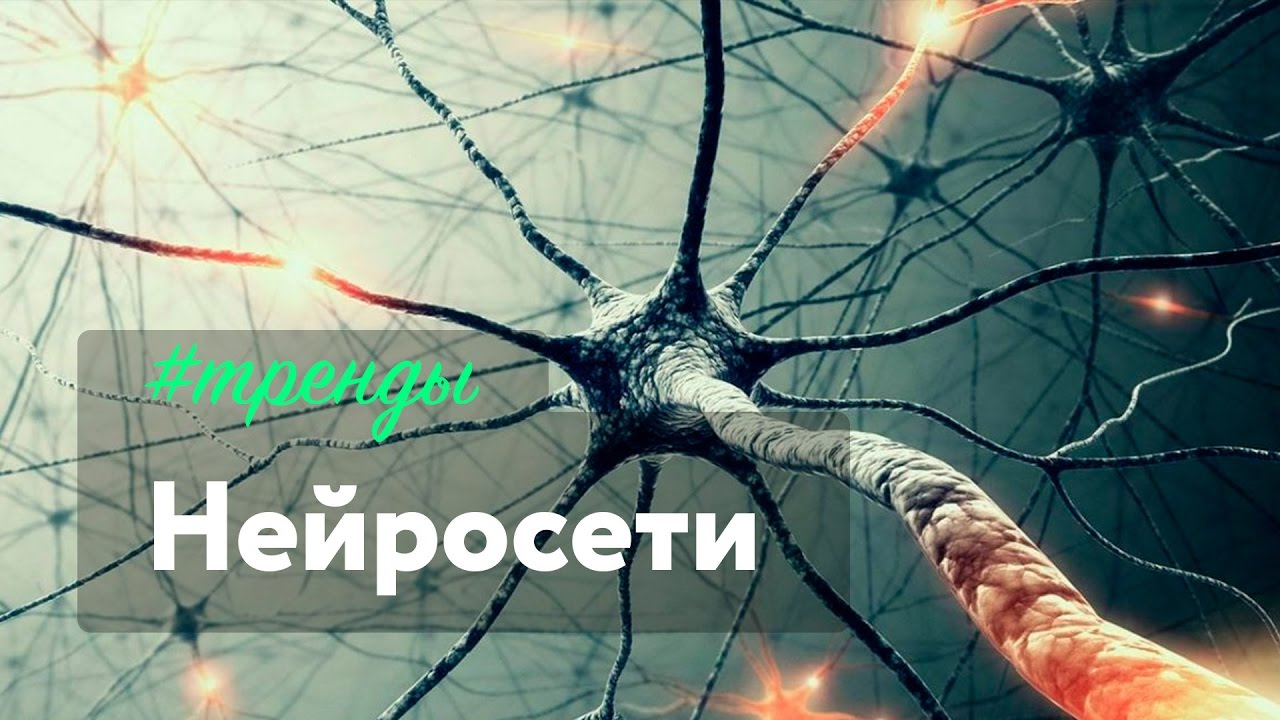
What is more powerful - the human brain or computer? For the overwhelming majority, the answer to this question is obvious and, what to argue, is true. But if you look at the work that scientists have done in recent decades, we will notice that many of them tried to bring the principle of the computer to the way of thinking of a person, and not without success. How was this possible? With the help of neural networks - computer systems assembled from hundreds, thousands or millions of artificial brain cells that are able to learn and act on a principle that is extremely similar to how a person’s brain works.
The human brain and the computer are often compared, and it is necessary to recognize that they have quite a lot in common. The ordinary brain consists of approximately 100 billion microscopic cells called neurons. Each neuron consists of a cell body with several connections departing from it — a set of dendrites (cell input channels that transmit information to the cell body) and a single axon (output cell channel that deals with information output). In a computer, the equivalent of a neuron is a nanoscopic device called a transistor. Modern microprocessors used in computers and mobile devices contain more than two billion transistors.
On this, perhaps, the similarities between computers and human brains end and the differences begin. And it's not even that computers are cold metal boxes filled with binary numbers, and the brain is something warm, alive and populated with thoughts, feelings and memories. The real difference is that a computer system consists of relatively simple serial connections, while neurons in the brain are combined into complex parallel connections, with each neuron associated with about 10,000 of its neighbors.
On the one hand, we have hundreds of millions of transistors combined into a simple and logical system, on the other hand, there are 100 times more neurons that interact with each other through complexly intertwined connections. In the end, it turns out that the process of human thinking, at least at this stage, is extremely difficult to learn and even more so for artificially recreating. And this is exactly what scientists Warren McCulloch and Walter Pitts tried to do when in the 40s of the last century they first formulated the concept of an artificial neural network.

Computers are designed to store large amounts of useless information for them, which acquires meaning and logic only if you pre-specify the exact instructions for its processing. The human brain also learns slowly, and often it takes several months to figure out something difficult. But unlike computers, we can spontaneously collect information into bizarre patterns - this is where the roots of Beethoven or Shakespeare originate: the creation of original patterns, the formation of non-standard connections and the perception of things so that they appear in a new and unexpected light.
Agree, it would be great if one day computers could manage the available information in the same way? In fact, we are already moving towards this intriguing future, and very quickly. And it may have been due to several major acquisitions of recent years: noticeably increased computer performance, the emergence of artificial neural networks and machine learning, and the emergence of the Internet with its gigantic datasets that are used as educational material for artificial intelligence.
The basic idea of artificial neural networks is to copy complex interconnections between the cells of an artificial brain so that the machine can learn, recognize patterns, and make decisions the way a person does. The most amazing thing is that the neural network does not need to be programmed: it is designed for independent learning.
However, one can hardly say that the neural network is an exact artificial copy of the brain. It is important to note that a neural network is primarily a computer simulation: such networks are created by programming ordinary computers, in which conventional transistors combined in logical connections operate in the traditional way. However, they function as if they were made up of billions of tiny brain cells working in parallel. Computer simulation is just a collection of algebraic variables and mathematical equations that put them together.
A typical artificial neural network consists of tens, hundreds, thousands or even millions of artificial neurons, called blocks, which are arranged in layers, where each block is connected to an adjacent one, both in its own layer and in the next. Some of them are input blocks and are designed to receive information from the outside world. These blocks are connected to hidden blocks that process the data and occupy most of the artificial brain. Finally, output blocks are engaged in extracting the information received and processed.
The connection between blocks is characterized by a number, which is called a weight and can be either positive (when one block excites the other) or negative (when one block blocks or suppresses another). The higher the weight of this connection, the stronger one unit affects the other. This is reminiscent of how cells in a living brain affect one another.

Information flows through the neural network in two ways. When the network learns or functions normally after training, information samples are fed to it through input blocks, and then get to output blocks. Such a common structure is called an event prediction network. However, the appearance of information does not guarantee the excitation of all blocks. Each block receives an input from its neighbor, and such signals are multiplied by the weights of the links they travel. Each block adds a signal to the input data, and if the total amount is greater than the threshold value, the block excites neighboring blocks.
In order for a neural network to learn, it is necessary to have feedback: in the same way, children need to constantly talk about what is good and what is bad. In fact, we use feedback all the time. Remember how you learned to play bowling: when you pick up a ball and roll it along a track, your brain watches the speed of the ball and its trajectory. Depending on the result of the throw, the next time you will remember how you rolled the ball last time, and you will adjust your movements in order to achieve a better result. Thus, you used feedback to compare the resulting result with the desired one and to correct your actions in order to achieve success.
Neural networks are trained in a similar way by processing feedback, which is called the "back propagation method of error." It compares the output data with the data expected to be received, and uses the differences between these data to make a change in the weights of the links between the blocks occupied in the network. Moreover, the changes concern all links: from input blocks to output blocks and back. Over time, the back-propagation method of error allows you to train a neural network and reduce to zero the difference between the desired and actual results.
After the neural network has been trained using a sufficient number of examples, it reaches the stage where you can provide her with a completely new set of input data that she has never seen and monitor her reaction. For example, you showed the neural network a huge number of photos of chairs and tables, as much as possible by explaining to her the difference between these pieces of furniture. After that you try to show her a photo of the couch and wait for the result. Depending on how effectively you have trained the neural network, it will try to classify what it sees into the category of “chair” or “table”, based on experience. It is these processes that occur in the brain of a young child, who for the first time sees an object and tries to attribute it to the list of concepts that he already knows.
If you think about it, then this example alone is enough to understand that artificial neural networks in the course of their evolution can have many practical applications. For example, aircraft manufacturers are already testing automatically learning autopilot systems that are not programmed in advance, but make decisions based on real-time signals from the cockpit dashboard and control the aircraft based on the information received.
Or take, for example, the banking sector. Imagine that you manage a bank where thousands of credit card transactions take place every minute. Neural networks can be successfully used to identify activities that are classified as fraudulent. The following requests can be used as input: 1) Did the cardholder appear in person? 2) Was a valid card PIN used? 3) During the past 10 minutes, has five or more operations been performed on this card? 4) Is the card used in the same country where it was issued?
After receiving a sufficient amount of interference, the system will be able to automatically mark transactions as suspicious, so that bank employees can then decide whether to take any action against them. In addition, the neural network could help banks decide whether to issue a loan to a client by quickly analyzing its credit history, current income and employment.
But such applications of neural networks are still only at the concept stage and are unlikely to come into our life in the very near future. Today, news on the use of this technology comes mainly from the entertainment industry. First of all, I recall the acclaimed application Prisma, which turns ordinary photos into non-existent canvases by great artists, as well as the scandalous service Findface, which allows you to find his VKontakte page through a secretly taken photo of a person’s face. And of course, it is impossible not to recall the experiment of Yandex, when, after studying the lyrics of Yegor Letov, the neural network wrote a hypothetical album of the Civil Defense group.

But if you put aside the irony, today neural networks bring much more benefit to our everyday life than you can imagine. Why do you think in recent years there has been noticeably less spam in your mail? In many ways, thanks should be given to computer systems that have learned to distinguish between real letters and correspondence, whose place is in the bin.
Thanks to neural networks, machine translation has also noticeably improved lately, and such systems no longer give out one of the random meanings of a word, but pick up a translation depending on the context, having studied a huge number of sentences in different languages.
But still at this stage computers are comparable in their level of consciousness with children of preschool age. Nevertheless, everything necessary for their further education is available: data volumes continue to grow, as does the computing power of the processors. So we, stocking up with popcorn, continue to observe how this idea develops and what it will eventually lead to.
# trends | Machine learning
The article is based on materials .
Comments
Post a Comment