Predicting the future is hard. Finding out what technological wonders await us in the next few years is almost impossible; what to say then about the next eighty? Nevertheless, the resource Gizmodo decided to collect a list of ten cool, advanced and amazing technologies that should be around 2100. Some of these technologies are already “almost here”, but the same can be said about the thermonuclear fusion promised to us many years ago. And no matter how incredible the things described below may seem to you, most of them - if not all - should simply appear at the turn of the 22nd century. The reason for this lies in innovation, which is not on this list: artificial super-intelligence. As computer scientist I.J. Goode aptly put it in the 1960s, "the first super-intelligent machine will be the last invention that a person needs to make."
As soon as the machine acquires an intellect superior to human — and this can happen as early as the 2050s — the words “technically possible” will no longer make sense. Reasonable machines will replace people as designers and engineers, will create technology from any of our tales and fantasies, and even more. Before you are ten of these technologies that could change almost everything.
Brain connected virtual reality
Wearable virtual reality devices like the Oculus Rift are all, of course, cool and good, but no matter how complex such devices may be, the “true” feeling of being in parallel reality will always remain beyond reach. Need something more ... introducing. By the year 2100 we will definitely find a way to make the experience of virtual reality indistinguishable from this very reality. Remarkably, this experience will be directly fed to our brain, bypassing ordinary organs of sensation and making everything that happens incredibly reliable.

To get a material sense of what is happening, we need to get to the source of all experience: the human brain. In fact, the brain (and other things) is a device for processing the senses. Everything that we feel day after day, whether it is the smell of old socks or the alluring glow of the monitor, everything passes through the brain. But what really is real? When we talk about what we feel, what we hear, what we see and try, only the electrical signals read by the brain are “real”.
Futurologist Ray Kurzweil explained how this could happen in his book "Singularity is Close."
He believes that everything will start with nanorobots in our bodies and brain. Nanobots will keep us healthy, provide complete immersion into virtual reality right from inside our nervous system, provide direct communication of the brain with the brain via the Internet, and significantly expand human mental capabilities. But do not forget that non-biological intelligence "grows wiser" twice a year, and biological intelligence is essentially in place. By the 2030s, a non-biological part of our intellect will supplant the biological one.
Kurzweil’s timeframe is, of course, a little optimistic, but his words are not without meaning; We will find new ways to break the blood-brain barrier and create microscopic machines that can travel throughout the body. And we are also working on drawing up a detailed map of the brain, which also includes areas that process incoming sensory information.
After implantation into the brain, Kurzweil's nanobots could detect various sensory inputs in the brain and close them (that is, hinder the passage of electrical signals from the retina of the eye, ear, etc.), making the person completely cut off from the real environment. This would be an ideal sensory deprivation chamber. Instead of these signals, nanorobots that receive wireless signals would send theirs to the brain and feed it with artificial senses. The person will feel as if he is in a different world.
Utilitarian fog
Innovator in the field of nanotechnology J. Storrs Hall presents utilitarian fog (or service nanosmog) in the form of a swarm of nanorobots, or “foglets”, which can take the form of almost any object and change their shape on the fly. Storrs came up with this idea when he tried to imagine the future safety belt. Instead of static belts and inflatable airbags, Hall introduced a smart cloud of connected froglet snowflakes that can move in accordance with any object nearby, including passengers in a car.
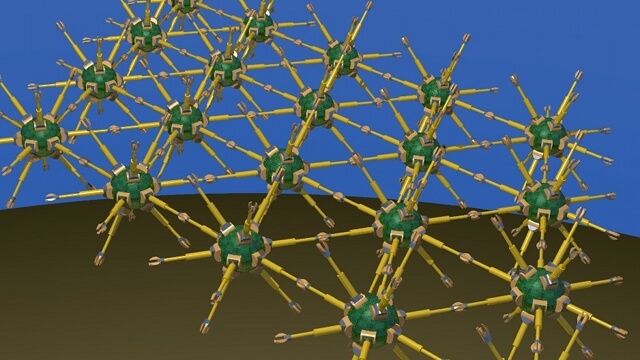
Utilitarian fog defies the imagination in terms of technological complexity. Each foglet will be only 10 microns across (the size of a human cell), equipped with a tiny, rudimentary on-board computer that will monitor its actions (and externally supported by an artificial intelligence system) and a dozen telescopic limbs that will be pulled out in the form of a dodecahedron. By connecting, two phlettes will form a circuit allowing transmission of energy and communication over the network. These voglets will not be able to swim, but rather will form a lattice structure that stretches in all 12 directions.
Utilitarian fog will work as a programmable matter, can move, envelop and even transport an object or person. Perhaps such a fog could even be used to create a virtual world around a person.
Cosmic Solar Energy
As our civilization tries to mitigate the effects of climate change and move to a more sustainable energy economy, it seems that we can never meet our insatiable energy needs. Space energy - an idea that was proposed back in the 1960s - can solve this problem once and for all.
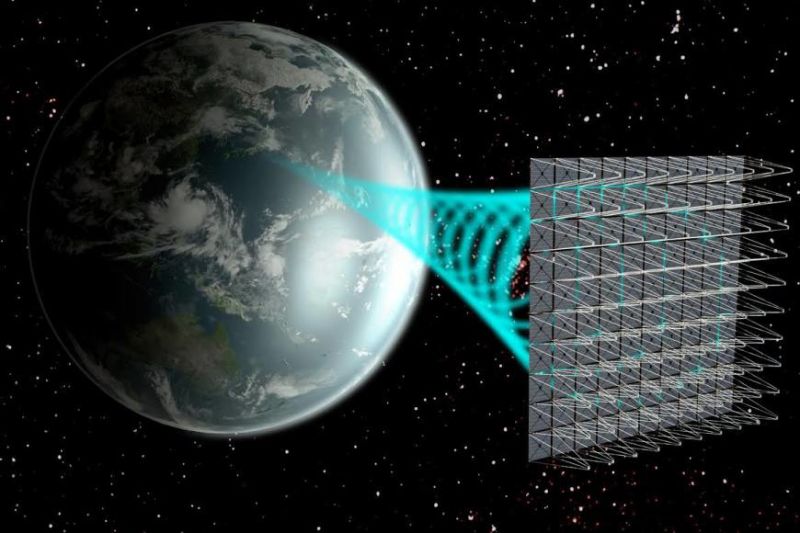
Approximately 60 years ago, Peter Glaser introduced solar satellites capable of transmitting captured solar energy to the Earth’s surface via microwaves. Since then, various schemes have been proposed for using this idea, and Japan even has a real plan. The SBSP system is a Japanese orbital farm, which will maintain a stationary orbit of 36,000 kilometers above the equator and transfer energy to Earth via laser beams. Each satellite will target a 3-km wide receiving station that will generate gigawatts of electricity. This is enough to power half a million homes. For the sake of safety, the receiving stations will be located far from the human habitat, in the desert or on an island.
Loading consciousness
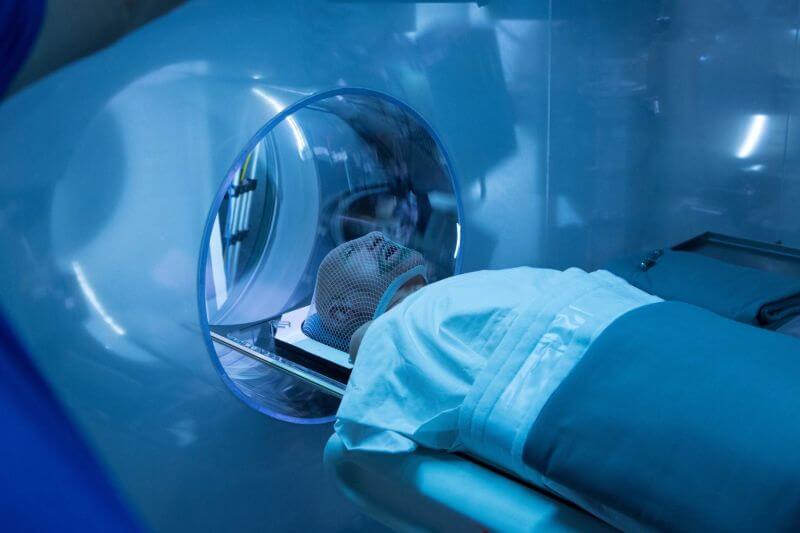
At the turn of the 22nd century, many people would prefer a purely digital existence, free from all biological limitations. Loading consciousness or emulating a whole brain will allow you to accurately copy an existing biological brain. Scanning will capture every detail down to the molecular level and include memories, associations, and even personal quirks of a person.
Futurologists do not yet know exactly when consciousness loading will be available, but an important step will be to make sure that all the most important parts of the brain are copied, especially those that are tied to the human sense of identity (namely, the parahippocampus and the retrosplenial cortex of the brain). We also have to resort to “destructive” copying, when the existing brain is cut or removed altogether to record the state and memories of a person. Alternatively, one could use a sufficiently powerful brain scanner to take pictures of the brain and then “insert” them into a computer capable of transmitting this information to a functioning consciousness. In order for a loaded person to function normally, he will also need a virtual body and environment.
An important scientific and philosophical question that needs to be asked is whether this process will be a true “transfer” of consciousness, rather than a copying of the human brain. Moreover, it is not entirely clear whether it is possible to recreate self-awareness on a digital substrate. Frighteningly, each download may produce a sort of zombie that will behave like a person in the past, but in fact act on the script, like a program.
Weather control
It is highly unlikely that our species will be able to fully control the weather by the end of this century, but to seriously influence it - completely. We are already sowing clouds with particles to stimulate precipitation; California has been doing it for 50 years. During the 2008 Summer Olympics in Beijing, Chinese authorities launched 1,100 rockets into the clouds to trigger heavy rains before the storms reached the capital. Sometimes even in thunderclouds they launch laser pulses in the hope of triggering lightning.
In the future, weather engineers will be able to build massive wall-like structures that will not allow destructive tornadoes to form, or they will build massive - very massive - turbines at sea that will drain energy from hurricanes. A 2014 study found that a wind farm consisting of tens of thousands of individual wind turbines could reduce wind speed by 148 km / h and reduce storm tides by 79%. In essence, this means winding down the hurricane.
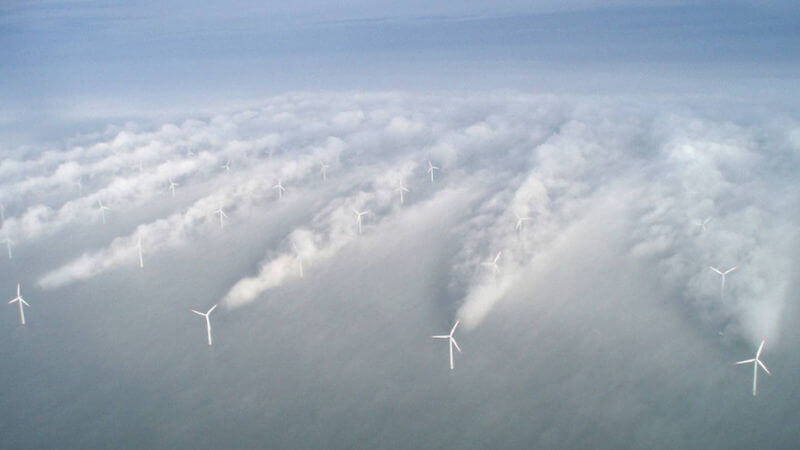
More interestingly, we could end up building a weather machine to create programmable weather. A particularly curious global plan requires a thin cloud of small transparent globes that rise into the atmosphere and can reflect incoming sunlight. Inside each ball will be placed a mirror and a GPS-module, a mechanism for controlling the orientation and a small computer. A “programmable greenhouse gas”, raised by hydrogen, will be located 30 kilometers above the Earth’s surface. When millions of mirrors look from Earth, they will be able to reflect sunlight back into space. This system, controlled by artificial intelligence, will be able to change the weather conditions around the world and turn places that are not particularly suitable for living in areas with a temperate climate.
Nanoassemblers
Think 3D printers are cool? Then wait for the appearance of molecular assemblers (nanoassemblers), the hypothetical machines described by one of the fathers of nanotechnology, Eric Drexler. Drexler described the nanoassembler as a device capable of manipulating individual atoms to create the desired product.
Drexler especially emphasized that biological assemblers already exist and produce complex and amazing structures like bacteria, trees, me and you. Using the same logic, he believes that we will eventually be able to use the mechanical properties of ultra-small objects and use similar principles to create objects of any shape or texture.

Nanoassemblers can lead the world to an era of "cardinal abundance", allowing us to produce objects and materials that would otherwise be impossible to build, literally from scratch (or, more precisely, from molecules). Such devices could even cook us food. To make a steak, the nanoassembler will need carbon, hydrogen, and nitrogen, from which he will add amino acids and proteins, and then collect in the form of a steak.
Geoengineering
The effects of climate change are likely to be irreversible. Regardless of what we will do from now until the year 2100, the level of greenhouse gases in our atmosphere will continue to warm the planet.
In order to prevent many environmental disasters that follow climate change — from rising sea levels and super-droughts to super storms and mass extinctions — we, albeit reluctantly, must begin to change the planet with the help of geo-engineering.
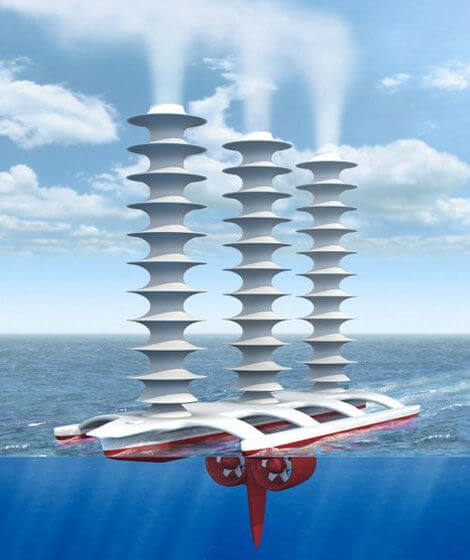
Some well-known geohacking proposals include the sowing of cirrus clouds to reduce reflectivity, the injection of stratospheric particles to control solar radiation, the injection of sulfuric aerosols causing global darkening, and simple solutions such as restoring tropical forests to restore carbon balance. Other ideas include a giant space reflector (although this may be beyond our technological capabilities by the year 2100), fertilizing the oceans for the growth of carbon sucking algae, and increasing the alkalinity of the ocean to make them less acidic. Obviously, there is no lack of ideas.
The problem of geoengineering, of course, is that we can confidently destroy the planet, if something goes wrong, and also become dependent on it. But desperate times require desperate measures, and we will rely on complex climate models and supercomputers.
Mind communication
Advances in communication technology and neuroscience will transform humankind literally into a telepathic view.
The emergence of a direct connection from the mind to the mind will even more connect us as individuals and, presumably, will lead to a “swarm consciousness” - an extensive network of interconnected minds working together through the Internet. In such a future, we will observe the dissolution of personality and the rise of collective mass consciousness.

Remarkably, this future may be closer than we think. Back in 2014, an international team of researchers was the first to demonstrate a direct and completely non-invasive system of communication between the brain and the brain. During the experiments, participants were able to exchange mentally projected words, although they were separated by hundreds of kilometers. A year later, another team of scientists transmitted brain signals via the Internet, controlling the movements of the hands of another person. These systems, which are now only in their infancy, hint at a future in which we can use the power of thought to communicate between ourselves and the telekinetic control of smart devices in our environment.
The power of fusion
Earlier this year, physicists in Germany used a 2 MW microwave pulse to heat a low-density hydrogen plasma to 80 million degrees. This experiment produced no energy and lasted only a quarter of a second, but was an important step forward in efforts to launch nuclear fusion, an extremely promising form of energy production.
Unlike nuclear fission, during which the nuclei of an atom are divided into smaller parts, nuclear fusion creates a single heavy nucleus of two lungs. As a result, the change in mass generates a huge amount of energy, which, according to scientists, can be used as a working source of clean energy. Thermonuclear fusion can replace the burning of fossil fuels and conventional nuclear reactors.
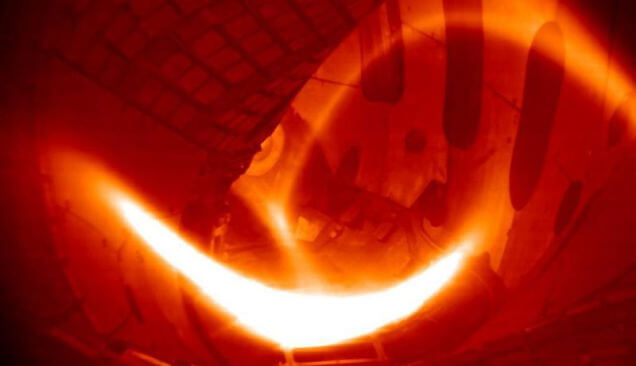
But for this, scientists need to figure out how to safely and safely manage the conditions that are commonly found in the sun. The problem is that plasma synthesis is very difficult to limit; free flowing streams of protons and electrons are creeped out. Our sun holds the plasma with powerful gravity, but on Earth you have to rely on magnets and lasers to repeat this feat. As soon as a tiny piece of plasma escapes, it can ruin the wall of the machine, so the synthesis reactor shuts down.
Artificial life forms
Not wanting to dwell on genetic engineering, scientists of the future will probably want to create new organisms from scratch - from microscopic synthetic bacteria to new people. This flourishing discipline of artificial life began with an attempt to recreate a purely biological phenomenon, and computers and other synthetic media help her in this.
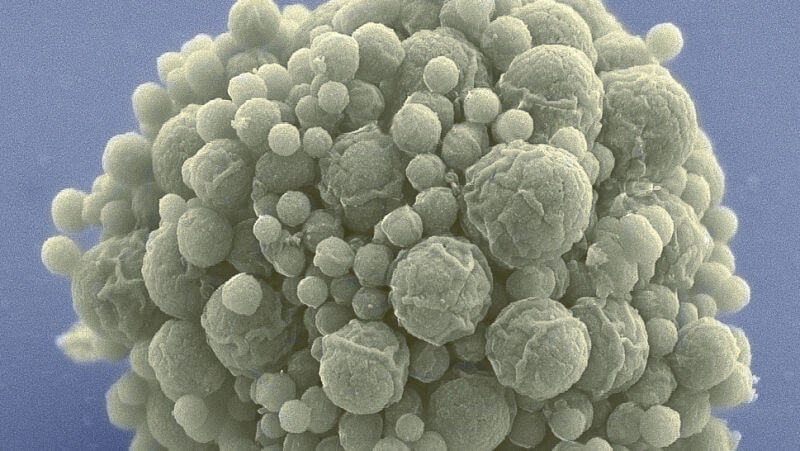
The desire to create synthetic forms of life is already underway. Earlier this year, scientists from the Institute of Synthetic Genomics successfully created an artificial bacterial genome, which possessed a scanty set of 473 genes — less than was found in any organism in nature. Further breakthroughs in this area will help biologists explore the basic functions of life and classify the most important genes in cells. Scientists can use "building blocks" of cells to create organisms with abilities that are not found in nature - for example, bacteria that can consume plastic and toxic waste, and microorganisms that will act as medicines for our bodies.
Any of the above technologies can change our civilization. What is less clear is how these miracles work among themselves; cross technology effects are often difficult to predict. For example, the connection of virtual reality connected to the brain, the loading of consciousness and artificial intelligence can lead to the creation of a computer civilization consisting of real people and artificial intelligence. Future geo-engineering systems may include a weather management system. And so on.
The more forecasts we make about future technologies, the more difficult it is to understand how the future may actually look like.
The article is based on materials .
Comments
Post a Comment